
In modern environments, a good part of our failed solution strategies comes from the misunderstanding of our environment. To navigate these complexities effectively, robust decision-making frameworks are essential. The Cynefin Framework, developed by Dave Snowden, provides a clear and practical lens for categorizing and tackling various situations. This article explores the core principles of the Cynefin Framework and its usefulness in organizational settings.
The framework divides organizational issues into four distinct categories: Simple, Complicated, Complex, and Chaotic. Simple situations are like well-oiled machines – clear cause-and-effect relationships exist, and established procedures lead to predictable results. Think of refilling the printer; the solution is obvious and works every time.
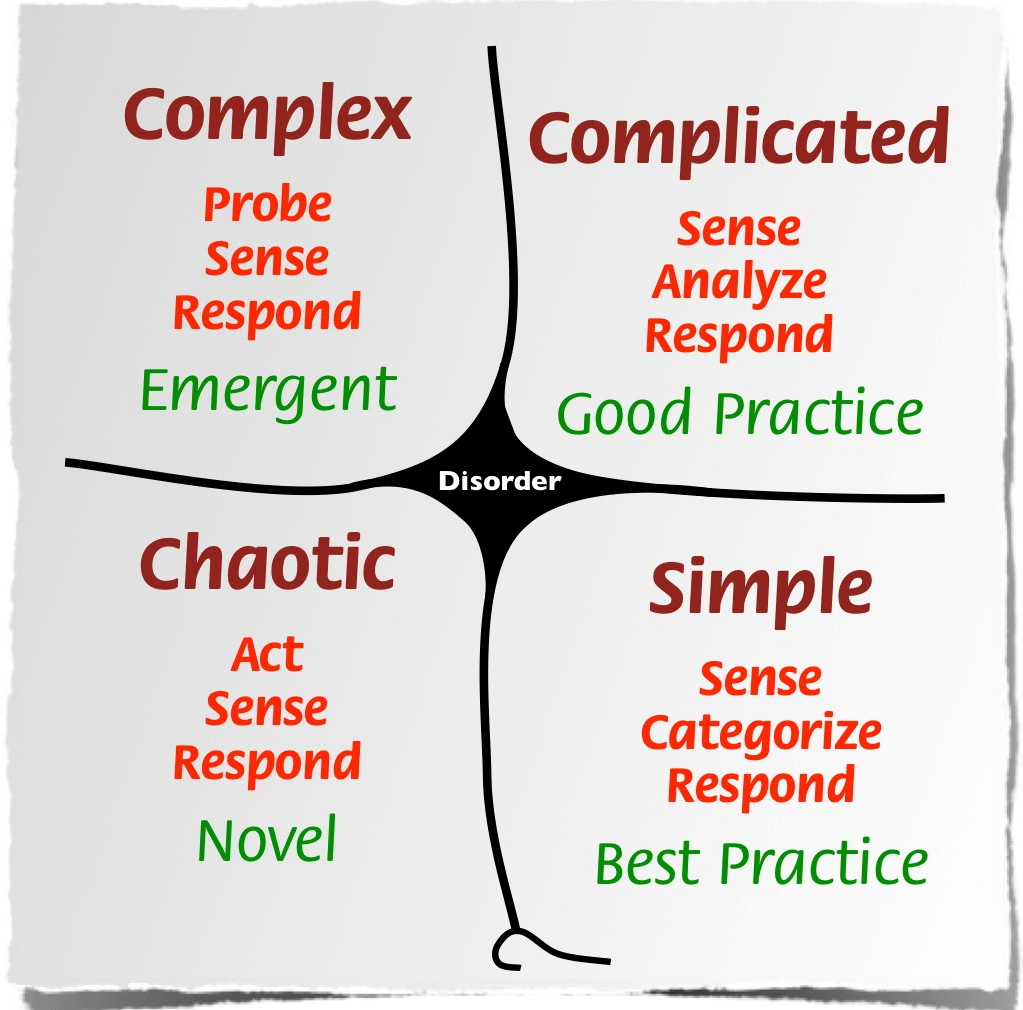
Complicated situations involve clear problems, but the solutions require some analysis and expertise. Here, existing knowledge and best practices guide the way, but a little investigation might be needed. Choosing the right marketing channel for a new product launch is an example. By leveraging marketing knowledge and industry benchmarks, the most effective approach can be identified.
Complex situations are trickier. There’s no single “magic bullet” answer, and the best course of action emerges through trial and error. Launching a product in an unfamiliar market falls into this category. Traditional methods might not work, so experimenting and learning from the market’s response becomes crucial.
Finally, chaotic situations are unpredictable and require immediate action to contain the situation. A sudden system crash exemplifies a chaotic domain. The focus here is on restoring order and minimizing damage, with a deeper analysis of root causes coming later.
The Cynefin Framework’s strength lies in its ability to categorize situations based on their inherent complexities and suggest appropriate decision-making strategies. By recognizing the “terrain” they’re navigating, organizations can leverage proven practices for simple and complicated situations, while adopting an exploratory approach for complex environments. In chaotic situations, immediate action takes center stage, followed by a structured analysis to prevent future occurrences.
The Cynefin Framework equips organizations with a valuable tool for navigating the complexities of decision-making. By fostering a clear understanding of the problem landscape, organizations can enhance their adaptability, reduce risks, and achieve long-term success.
Links:
 Albrecht Günther
