
The Johari window (the name derives from an acronym of the inventors first names Joseph Luft and Harrington Ingham) is already 70 years old – and for me still a valuable model to reflect my bright and shadow sides.
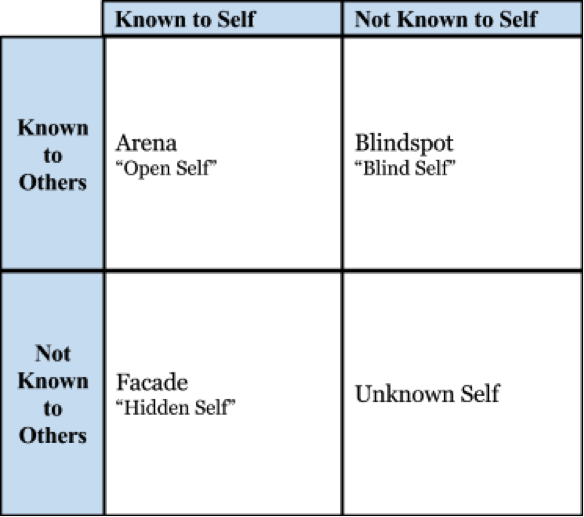
Look at the for windos. One pane is what I know about myself, and what others know about me. This is our “open” zone – where information flows freely. The next pane is what I don’t know about myself, but others do. This is our “blind spot” – things we might be overlooking.
The Johari Window gets interesting on the bottom half. There’s a pane of things I know about myself, but others don’t. This is our “hidden self” – maybe hidden talents or skills! Finally, there’s the unknown zone – things neither I nor others know.
So, how does this apply to teams? By using the Johari Window, we can:
- Reduce blind spots: Teammates can give honest feedback, helping us see areas for improvement.
- Unlock hidden talents: Maybe that quiet teammate has a knack for presentations we never knew about!
- Build trust: Open communication through the “open” zone fosters trust and psychological safety.
The Johari Window isn’t about judgment; it’s about self-discovery and team growth. By using it, we can create a space where everyone feels comfortable sharing their strengths and weaknesses. This transparency leads to better collaboration, problem-solving, and ultimately, a stronger, more successful team.
Links: https://en.wikipedia.org/wiki/Johari_window
https://www.mindtools.com/au7v71d/the-johari-window
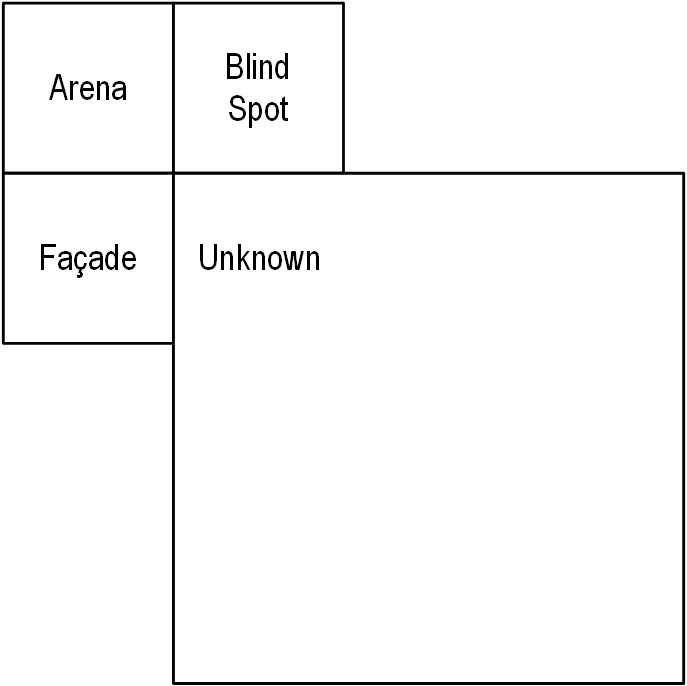
P.S: In my honest opinion, the real proportions of the Johari Window are show here 🙂
 Albrecht Günther
