
For me, the Kano diagram is one of the most underrated model in the modern marketing world. Especially as product owner, you might wat to stay focused on delivering features that truly resonate with your customers. That’s where the Kano Model comes in. It’s a powerful tool that helps us understand which features will satisfy, excite, and ultimately win over our users.
The Kano Analysis model (pronounced “Kah-no”), also known as the “Customer Delight vs. Implementation Investment” approach, is a way to categorize features based on customer satisfaction. We have three key categories:
- Basic Features: These are the must-haves. Their absence leads to dissatisfaction, but their presence is simply expected. Think of a shopping cart on an e-commerce site – a basic feature, not a delightful surprise.
- Performance Features: The better these features perform, the happier the customer. Think of faster loading times or a more intuitive interface. Customers expect continuous improvement in these areas.
- Excitement Features: These are the unexpected delights! They might not be explicitly requested, but their presence elevates the user experience. Imagine a product recommending items based on past purchases – a delightful surprise that builds customer loyalty.
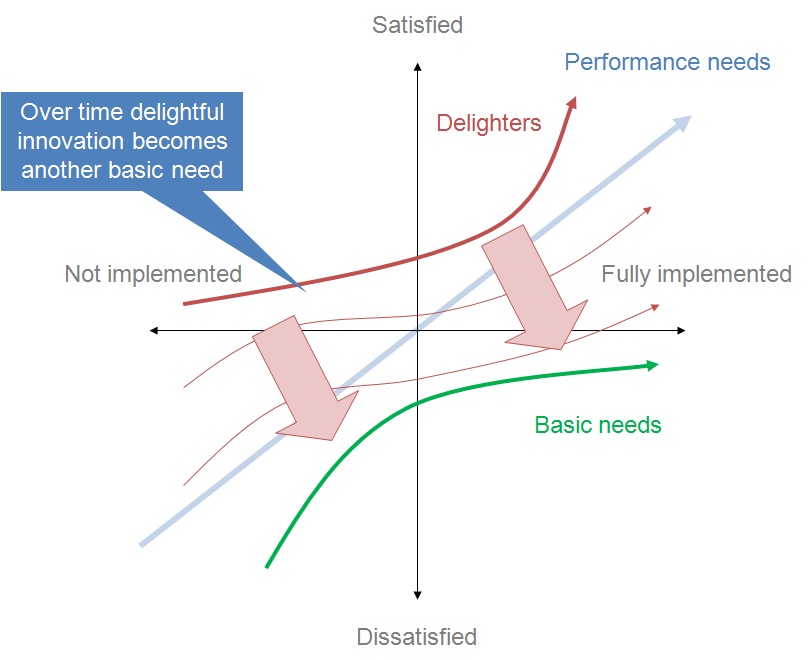
By Craigwbrown – Own work, CC BY-SA 3.0, https://commons.wikimedia.org/w/index.php?curid=23262780
The Kano Model’s beauty lies in prioritizing features based on satisfaction impact. We can focus on developing the Basic Features first, ensuring a solid foundation. Then, we can leverage Performance Features to keep users engaged. Finally, those Excitement Features become the secret weapon to truly differentiate our product and create a “wow” factor.
Try this: in every sprint, you mix some features of every category in your stories. By delivering some low hanging fruits early, you gain some credit for later delays.
By using the Kano Model, we can have a data-driven conversation about feature development. We can allocate resources effectively and focus on features that will have the biggest impact on customer satisfaction and product success. Ultimately, it’s about delivering value and creating a product that users love to use.
Links:
 Albrecht Günther